

Before learning about maker education, let's first understand what a maker is. A maker is a group of people who love or enjoy innovation. Makers can participate across ages, genders, and races. As long as you have creative ideas and are willing to bring ideas to life through continuous experimentation, collaboration, and communication and share them through the maker community, you are a maker. A maker is an omnipotent and unconventional attitude to life. The process of creation is always tortuous. A seemingly simple creative work may encounter many challenges, difficulties, and setbacks behind it. First, the definition of maker education. Maker education is based on the integration of information technology, inheriting the ideas of experiential education, project learning method, innovative education, and DIY concept. It emphasizes that learners integrate into the creative situation and participate in the creative process. Second, the concept of maker education. There are rich educational concepts behind maker education. "Learning by doing" means "learning from activities" and "learning from real experience". It connects the knowledge learned with life practice and integrates knowledge and action. Third, the value of maker education. Maker education has unlimited value potential and will have a significant impact on individual development, curriculum reform, education system reform and national talent strategy. At the level of individual development, maker education can better liberate children's nature and give them more space and conditions for hands-on operation, free exploration and development. Through "maker" activities, students can be exposed to more of the latest technologies, and use technology to slowly realize their creative ideas, constantly stimulating their interest in creativity. Through team cooperation and exchange, thinking collision, and mutual help, more novel ideas can be generated, forming a campus culture that loves creativity, enjoys creativity, and respects creativity, thereby enhancing students' creativity, hands-on ability, problem-solving ability, and teamwork ability. 2. At the level of curriculum reform, basic education must first cultivate everyone's creativity, and then on this basis, it can cultivate top-notch innovative talents who can climb the world's science peak. Through continuous maker course construction and implementation, it will help to completely solve the many practical problems faced by traditional education, such as outdated course content, inflexible course structure, disconnection from social practice, and monolithic teaching methods, thus driving effective reform of the entire curriculum system. 3. The reform at the educational level and the organization and implementation of maker education will further promote the optimization combination and transformation and upgrading of key elements of various education systems at all levels in our country (curriculum system, teaching methods, technical environment, evaluation mechanism, teaching staff, etc.). 4. At the strategic level of national talents, in the era of knowledge economy, innovative talents are a strategic resource for national development and a necessary condition for building an innovative country. Maker education will promote the accelerated transformation of our country's talent training model (from standardization to individualization, from singularity to diversification), cultivate a large number of "practical" scientific and technological innovation talents, and provide talent support for the construction of an innovative country.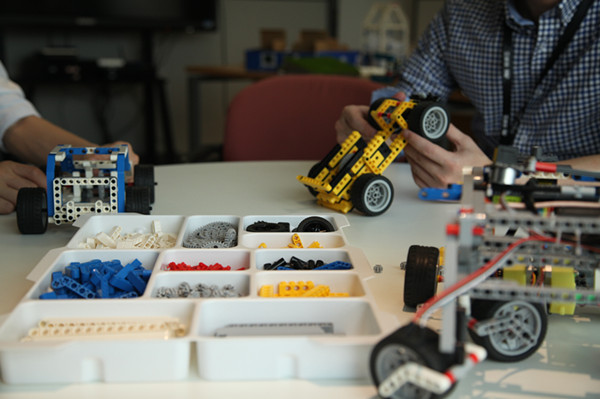
Each theme course developed by the Maker...
Makerspace construction allows people to...
Before we learn about maker education, l...
STEAM education is an upgrade of traditi...